
On 26-27 August 2026, RailNetEurope (RNE) welcomed railway professionals from across Europe to the second edition of the RNE Summer Academy in Vienna and online.
Over two days, participants explored the latest developments shaping the future of European railways, with a particular focus on the implementation of the new Capacity Regulation, including digital IT systems , and the evolving role of RNE in supporting a more harmonised European railway system.
Through a series of interactive sessions, participants gained first-hand insights into RNE’s activities and the major changes currently transforming rail capacity management, traffic management, performance management and regulatory cooperation across Europe.
Day 1 Highlights
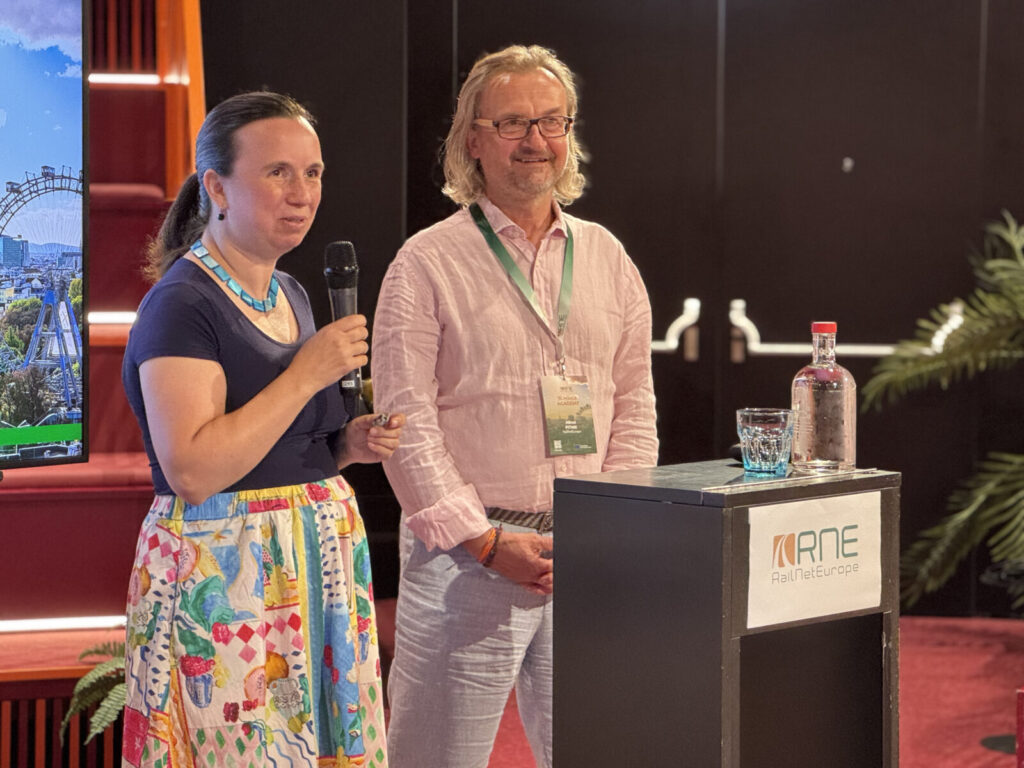
The Academy was opened by RNE Secretary General Joachim Kroll, who welcomed the participants and introduced the RNE organisation , its activities and the programme of the Summer Academy.
A central topic of the first day was the RNE Network Coordinator Project, presented by Alfred Pitnik, Co-Chair of the PRIME Transition Task Force and RNE Vice President, together with Elisabeth Hochhold, Deputy Secretary General of RNE. While the European Network of Infrastructure Managers (ENIM) will act as the strategic decision-making platform for European infrastructure managers (IMs), RNE will support its work by facilitating coordination, serving as a contact point for applicants and stakeholders, and providing the expertise, services and digital tools needed to turn ENIMs strategy andwork programme into coordinated action. This close relationship will require clear and continuous dialogue across the sector. As Alfred Pitnik emphasised:
“Transparent communication with all involved stakeholders is extremely important.”
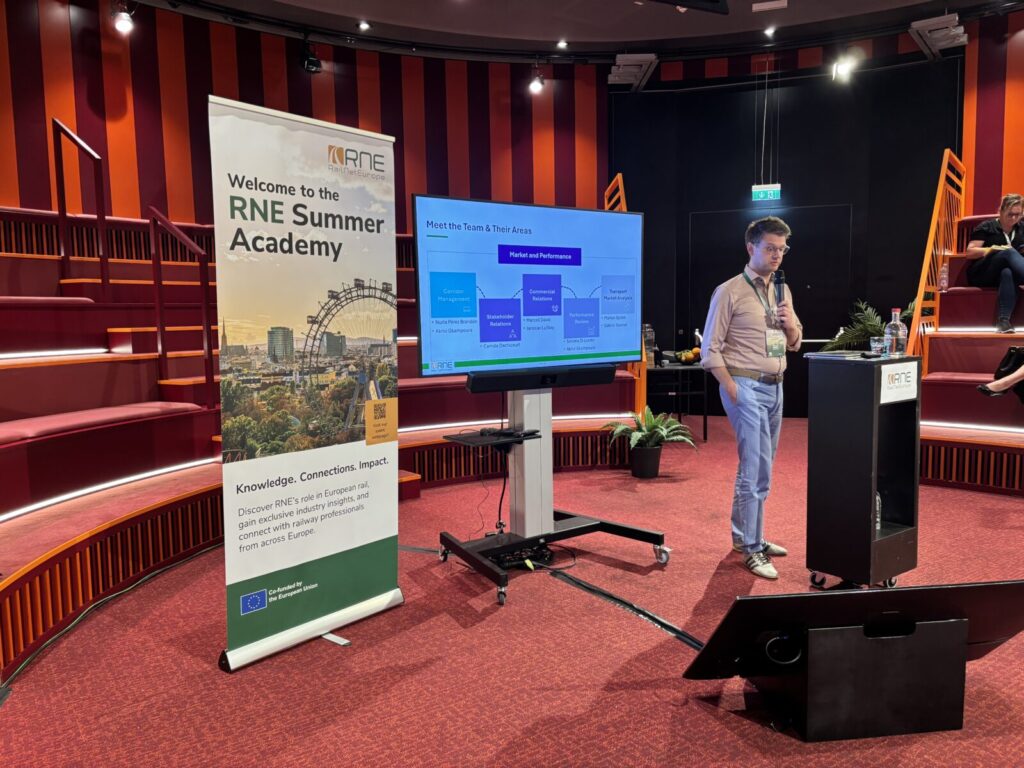
The programme continued with a session focused on Market & Performance, led by Reinhard Haller, Head of Market & Performance at RNE. Participants were introduced to the work of the department, which focuses on organising and supervising a wide range of stakeholder engagement activities, as well as performance reviews and transport market analysis at European level. The final session of the day was delivered by Eva Weber, Team Leader Finance & Funding, who provided an overview of RNE’s financial structure, ongoing EU funding programmes and preparations for financing future Network Coordinator activities.
Day 2 Highlights
The second day began with a session on Capacity Management, presented by Philipp Koiser, Head of Capacity Management at RNE. Starting with the fundamentals of European rail capacity management, the presentation explored the increasing challenges facing the railway network and the measures needed to accommodate growing transport demand while making the best use of existing infrastructure.





The presentation also showcased the latest developments in Digital Capacity Management, including the Capacity Planning Tool (CPT) and the Path Coordination System (PCS), which are being developed to support harmonised planning and allocation of railway capacity across borders.
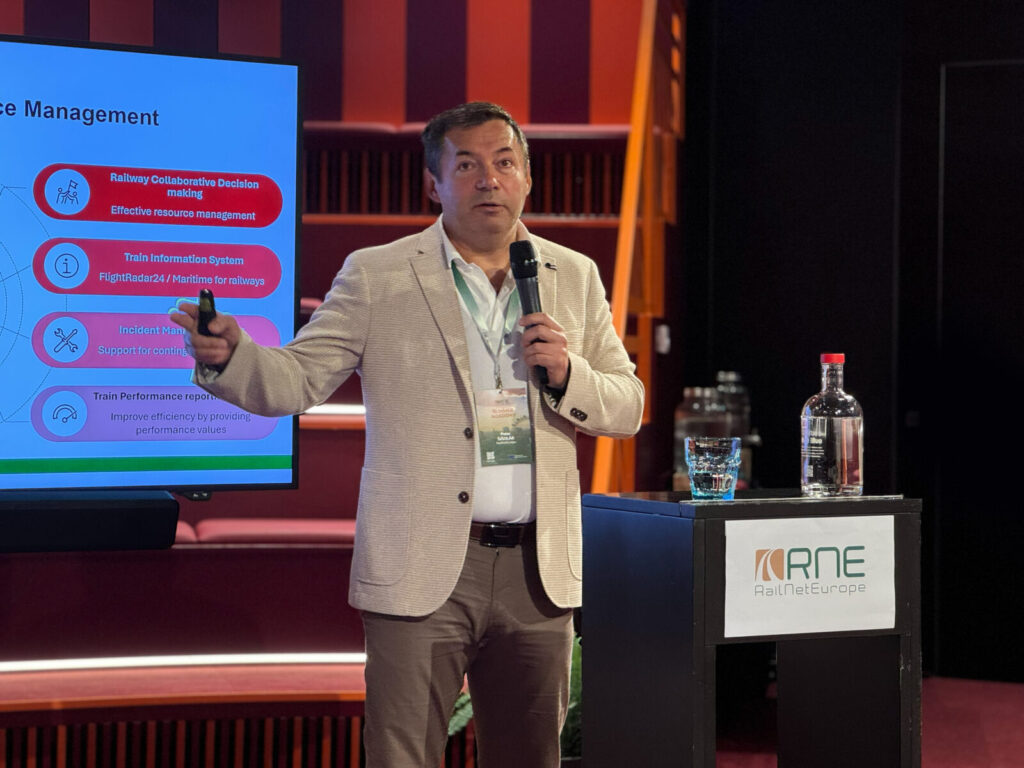
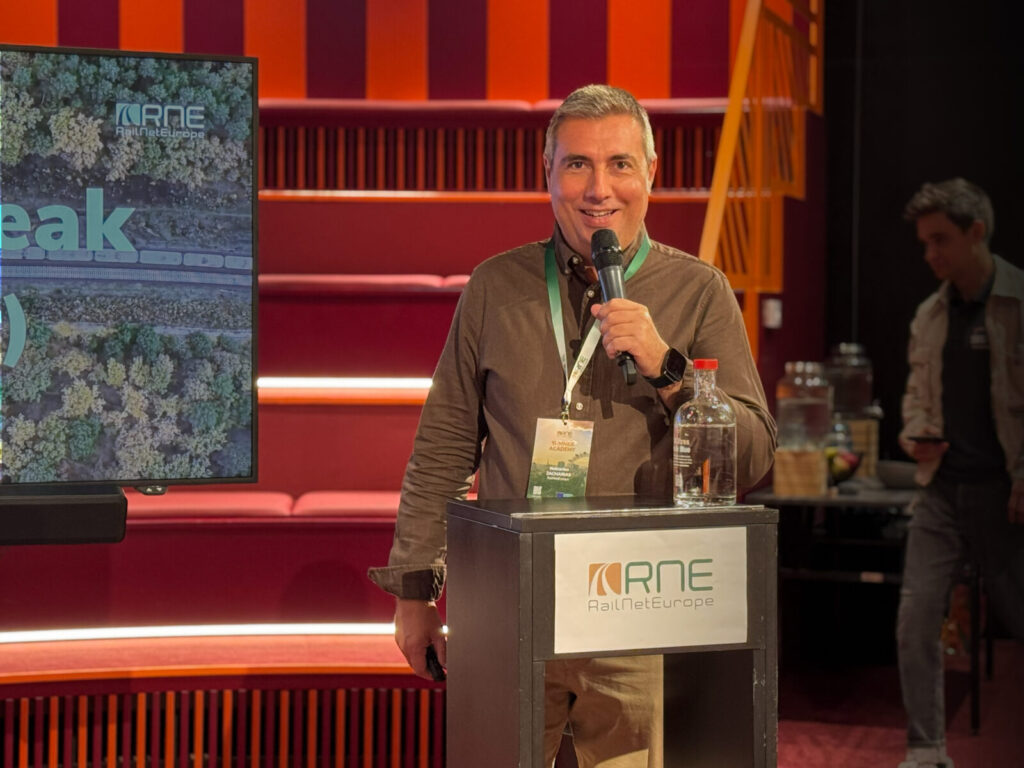
The programme then turned to Traffic Management, with a combined presentation introduced by Peter Šišolák, Head of Traffic Management, and contributions from Juraj Maliaček, Team Leader Traffic Process Management and Deputy Head of Traffic Management, and Nektarios Zacharias, Team Leader TIS and Deputy Head of IT.
This session highlighted RNE’s activities in supporting international operational cooperation across borders and digital solutions used to make traffic management more efficient. In this regard, two tools were introduced:
- The Translate4Rail Language Tool, designed to help reduce language barriers in operational railway communication
- The Train Information System (TIS), which provides real-time information on international trains and facilitates information exchange across the European railway network.
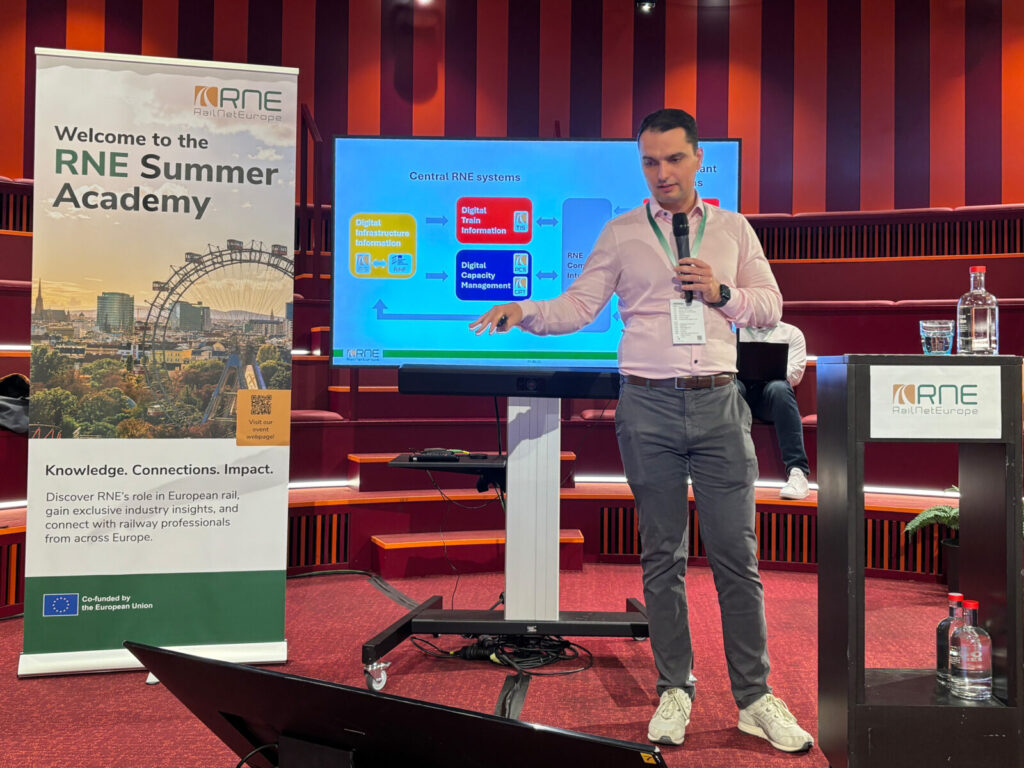
How RNE’s digital solutions support the transformation of the railway sector was further explored during a session on IT Strategy, presented by Andras Till, Team Leader CM IT – Deputy to the CIO.
The presentation showed how RNE’s digital ecosystem connects three main domains: Digital Capacity Management, Digital Train Information and Digital Infrastructure Information.
RNE is working towards a common architecture that enables European and national systems to exchange data and support connected workflows across railway planning and operations. By combining interoperable data exchange with more integrated and accessible digital solutions, RNE aims to help users navigate increasingly complex regulatory, operational and technical requirements.
As Andras Till summarised:
“This is an increasingly complex field that we are trying to make increasingly simple.”
The final presentation was delivered by Daniele Imbriani, Senior Regulatory Affairs Manager, who provided an overview of Legal Matters, Network Statements and Regulatory Affairs. The session explored how the Capacity Regulation is reshaping the regulatory environment and introducing new responsibilities for IMs, Regulatory Bodies and other European railway stakeholders.
Participants received updates on the development of European Frameworks, future interactions with Regulatory Bodies, Network Statement activities and the ongoing work related to Commercial Conditions. The presentation also addressed the importance of regulatory harmonisation, stakeholder consultation and alignment between national and European processes.
Closing & Outlook
The Summer Academy concluded with farewell remarks by Katja Krpoun, Team Leader Administration & Communications, who thanked participants for their active engagement and valuable contributions throughout the event.
The RNE Summer Academy 2026 provided a valuable platform for learning, networking and knowledge sharing among railway professionals. The strong participation and active exchange throughout the event reflected the sector’s shared commitment to addressing the opportunities and challenges deriving from the Capacity Regulation.l boundaries.