Timetabling is the coordinated process by which railway infrastructure capacity is requested, planned, and allocated to balance market demand with available network capacity at national and international level. Supported by harmonised European timelines and tools, it ensures transparent, efficient, and non-discriminatory allocation of capacity for reliable rail operations.
A key element of this process is the Capacity Supply which provides an overview of pre-planned capacity aligned with expected market needs. This pre-planned capacity can then be requested and further specified during the timetabling processes.
Allocation
Railway capacity is allocated through a set of coordinated timetabling processes, designed to address different planning horizons and market needs:
- Annual Timetable
The main capacity allocation process for the upcoming timetable year, where capacity rights are requested and coordinated well in advance to ensure a stable and reliable timetable, including international services. - Rolling Planning
A multi-annual allocation process that allows capacity to be requested closer to the time of operation, increasing flexibility while building on pre-planned capacity across multiple timetable years. - Ad-hoc
A process for requesting and allocating capacity during the running timetable, responding to late or unforeseen market demands. - Framework Agreements
Long-term agreements between applicants and Infrastructure Managers that secure capacity over several years, providing planning stability for services with long-term operational or commercial needs. - Feasibility Studies
Feasibility studies are a non-binding, pre-request process that allow applicants to assess whether new or modified rail service concepts could fit into the timetable through an iterative exchange with Infrastructure Managers.
Changes
- Alteration
Path alteration occurs when an Infrastructure Managers needs to adjust, replace, or withdraw an already allocated international train path. Alterations are typically required due to Temporary Capacity Restrictions, such as maintenance or renewal works, or to restore safe train operations following a force majeure event. - Modification
Path modification allows applicants to adjust allocated international train paths to reflect changing market needs. Changes may affect specific days or route sections and can be major or minor, depending on their impact.
RNE and its Members provide common timelines for requesting and allocating capacity. The timelines are published annually in the timetabling calendar. The current calendars can be downloaded below.
- RAILNETEUROPE CALENDAR FOR 2026 (TIMETABLE 2027) – WITHOUT RFCS
- RAILNETEUROPE CALENDAR FOR 2026 (TIMETABLE 2027) – RFC CALENDAR
- RAILNETEUROPE CALENDAR FOR 2027 (TIMETABLE 2028) – WITHOUT RFCS
- RAILNETEUROPE CALENDAR FOR 2027 (TIMETABLE 2028) – RFC CALENDAR
- RAILNETEUROPE CALENDAR FOR 2028 (TIMETABLE 2029) – WITHOUT RFCS
- RAILNETEUROPE CALENDAR FOR 2028 (TIMETABLE 2029) – RFC CALENDAR
Timetable Updates
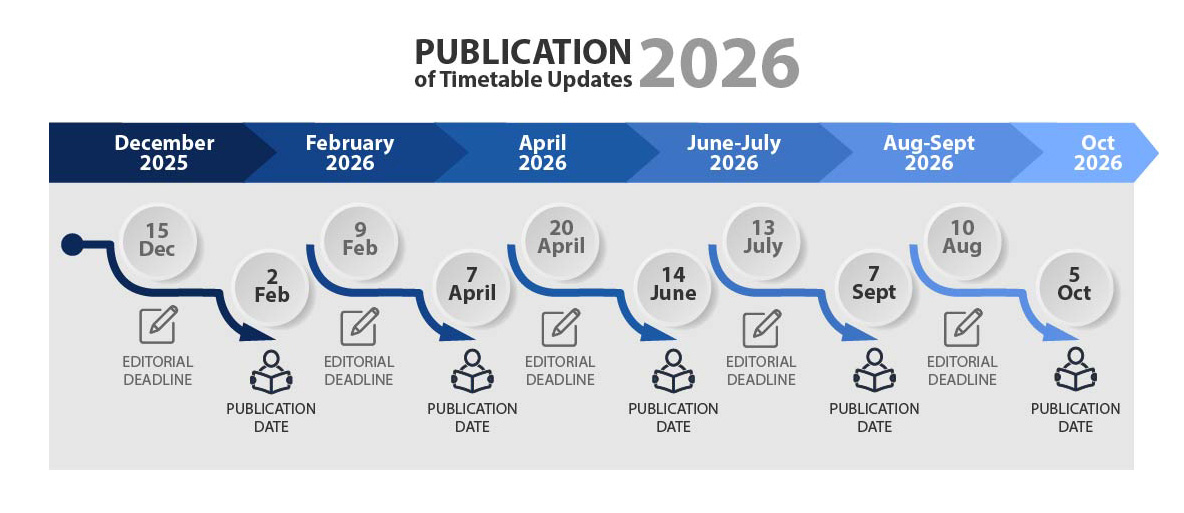
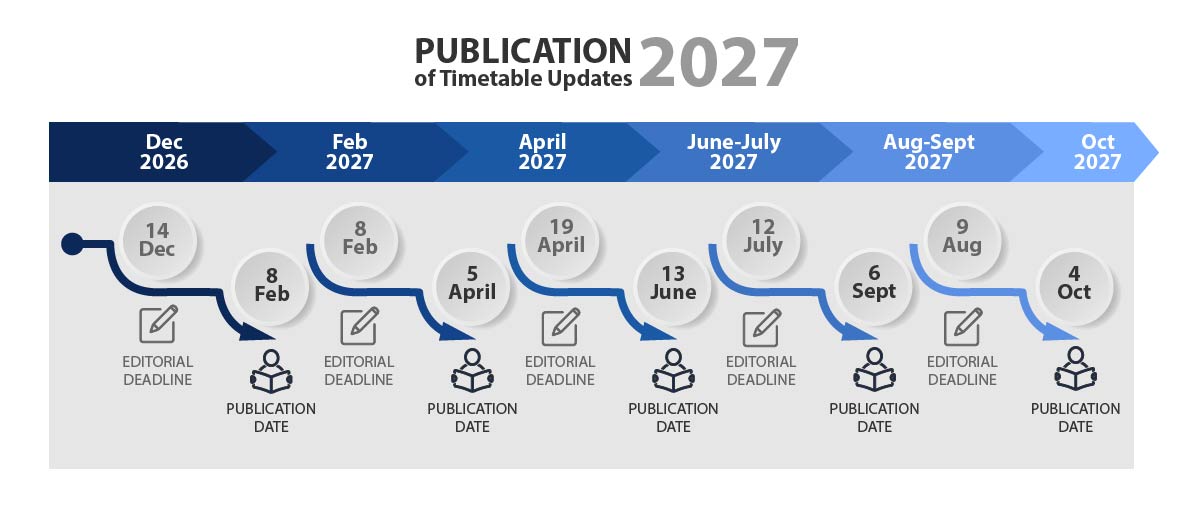
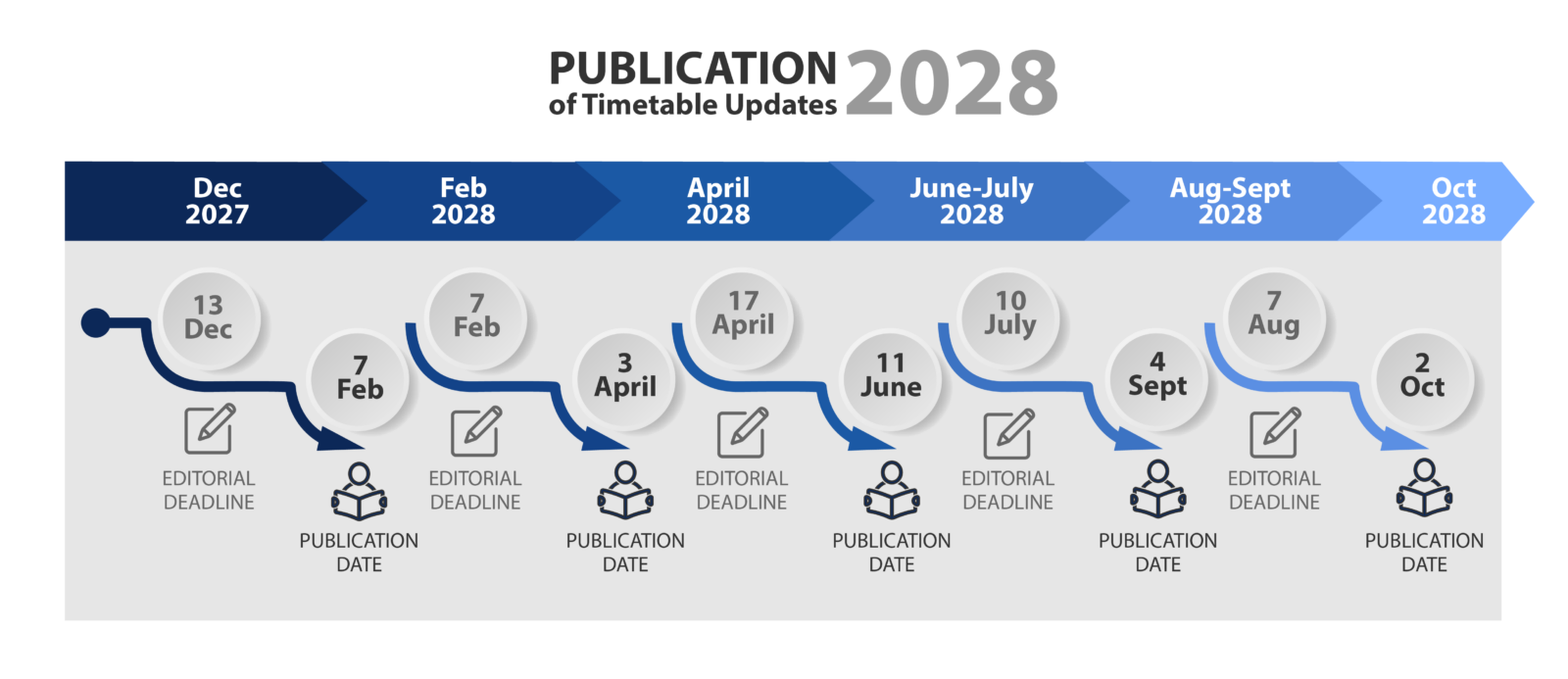
Editorial deadlines and publication dates can be found in the following graphics that show the timetable updates for 2026, 2027 and 2028.