
Almost 400 sector leaders, experts, and stakeholders attended the RailNetEurope Summit on Capacity Regulation 2026, which took place in Vienna and online.
Following the successful first edition of this event in 2025, the Summit once again provided an opportunity to discuss developments arising from the draft Capacity Regulation and their impact on the European sector’s current initiatives.
Inspired by the positive political agreement on the Capacity Regulation reached during the trilogue in November 2025, participants shared expectations, discussed challenges, and explored forward-looking initiatives to overcome implementation hurdles jointly.
The sector’s transition is underway
In his welcome speech, RNE President Paul Mazataud highlighted that the rail sector is not just talking about reform — it is already in the middle of a quiet revolution. Across Europe, stakeholders are mobilising, while concrete investments in digital systems show that change is becoming operational.
The transition is actively underway. Crucially, the purpose goes beyond legal compliance: the real objective is to transform rail into a more attractive and reliable option for both passengers and freight shippers.
Strong need for commitment
In his keynote, Kristian Schmidt, Director for Land Transport at the European Commission (DG MOVE), recalled that the Capacity Regulation (CR) is built on competition balanced with cooperation. It aims to improve capacity planning, better respond to the needs of different market segments, ensure fairer access to the network, and create more effective incentives to minimise disruptions and improve efficiency.
From a broader perspective, the transition to new governance and coordination structures will require a strong culture of cooperation to ensure that rail infrastructure is managed as a Single European Railway Area.
He thanked the sector for its past work and commitment, which was indispensable in improving railway performance and bringing this Regulation to fruition, and encouraged all stakeholders to maintain that commitment and European spirit to make the Capacity Regulation a success.
Designated ENIM Co-Chairs strive for open dialogue and inclusiveness
During the second round of keynotes, John Voppen, CEO of ProRail, encouraged Infrastructure Managers (IMs) to step up to the task entrusted by the European Commission: now is the time to start implementing. He stressed that challenges can only be overcome by joining forces and working together.
Johann Pluy, Member of the Management Board at ÖBB Infra AG, highlighted that the railway sector is facing a new chapter, with the common goal of turning the shared sense of urgency into success. Following a pragmatic approach, where room is given to test, learn, and improve, will be crucial to make this a reality.
The designated ENIM Co-Chairs are committed to reflecting diverse perspectives and representing the entire sector’s interests within ENIM through an inclusive approach.
As time is of the essence, it will be crucial to work towards efficient and transparent procedures starting now.
“Only through collaboration can we establish the desired Single European Railway Area.” – John Voppen, ProRail
Setting the Scene: Capacity Regulation
Elisabeth Hochhold, Deputy Secretary General at RNE, and Alfred Pitnik, Co-Chair of the PRIME Task Force and RNE Vice President (ÖBB Infra AG), opened the next segment with a concise scene-setting overview of the Capacity Regulation: its core elements, the actors involved and needed consultations, as well as the indicative timeline with key deliverables. This gave participants a common frame of reference for the discussions that followed.
Panel 1: Success Factors and Sector Expectations
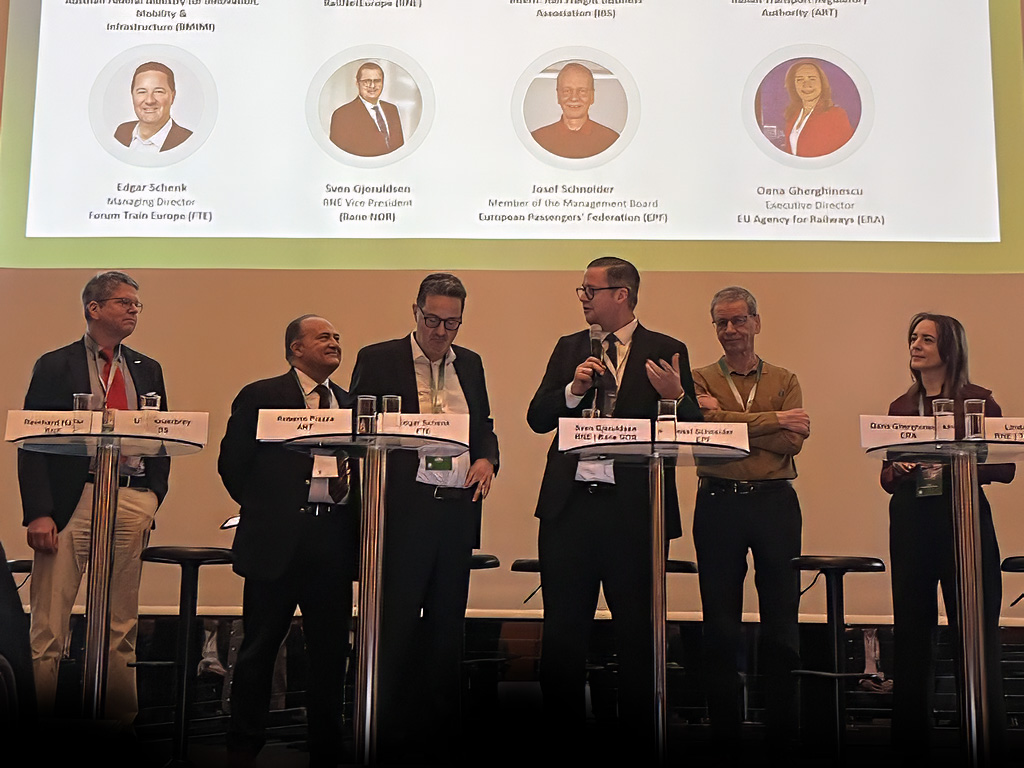
Moderated by Linda Thulin (PRIME, Trafikverket), the panelists shared their views on the key factors needed for the implementation of the Capacity Regulation, as well as the expectations from other players to make this a reality.
Thomas Spiegel (Austrian Transport Ministry), Oana Gherghinescu (ERA), Edgar Schenk (FTE), Reinhard Haller (RNE), Sven Gjeruldsen (Bane NOR), Udo Sauerbrey (International Rail Freight Business Association – IBS), Roberto Piazza (Italian Transport Regulatory Authority) and Josef Schneider (European Passengers’ Federation) discussed the opportunities and challenges that the whole sector will oversee, as greater cooperation both between and within the different actors is needed to achieve the Regulation’s goals.
Edgar Schenk (FTE) highlighted the need for Applicants’ early engagement to build better solutions for the railway sector, while Udo Sauerbrey (IBS) noted that challenges still remain, such as the predictability of available capacity and stable funding.
From the institutional and regulatory side, Oana Gherghinescu (ERA) called for giving a stronger European dimension to the rail market, supported by proper funding and a clear framework of rules on telematics and digitalisation. Roberto Piazza (IT RB) called for greater cooperation between the IMs within ENIM, as well as among the different public bodies (Member States, Regulatory Bodies, Safety Agencies) to simplify the rules governing the railway sector. Thomas Spiegel (AT Ministry) underlined the importance of long-term planning for funding and of strengthening the European dimension of capacity management and allocation.
Panel 2: Harmonised and Market-Oriented Capacity Management
Panel 2, moderated by Oliver Sellnick (DB InfraGO/RNE), explored how the sector is preparing for the new Capacity Management framework, which will apply for the first time for Timetable 2031. The discussion underlined that a qualitative, stable and reliable planning environment will require stronger harmonisation, better coordination, and solid digital foundations aligned with the new Capacity Regulation.
Panellists Weronika Karbowiak (PKP PLK S.A./RNE), Jan Ilik (FTE), Elmer van Buuren (European Sleeper / ALLRAIL), Bettina WunschSemmler (DB Cargo AG), and Philipp Koiser (RNE) highlighted regulatory expectations, national approaches, stakeholder needs, and the central role of digitalisation. Poland’s integrated TCR planning was cited as a good example of how long-term planning enhances stability. At the same time, Elmer van Buuren stressed the need for harmonised cross-border capacity offers to support international services.
Bettina Wunsch-Semmler emphasised that freight requires flexibility and that Rolling Planning will be one of the most transformative – and challenging – elements of the new framework. Ensuring its quality and availability is essential so freight is not disadvantaged.
Digitalisation was a central theme, with Philipp Koiser outlining current progress on central digital tools and links to national systems, while stressing the need for stronger change management to support a fully modernised process.
As the sector moves toward Digital Capacity Management, the panel agreed that clear rules, standardisation, and coordinated implementation will be crucial for successful deployment of the new Capacity Regulation.
Preparing for the Telematics TSI
Mickael Varga (ERA) briefly took the stage to invite stakeholders to participate in the Agency’s free webinar on the upcoming Telematics TSI. The hour-long session will take place on 10th March, 12:00 CET. For details and access please visit the ERA website – registration is not required.
Panel 3: Developments in Traffic Management Network Concept
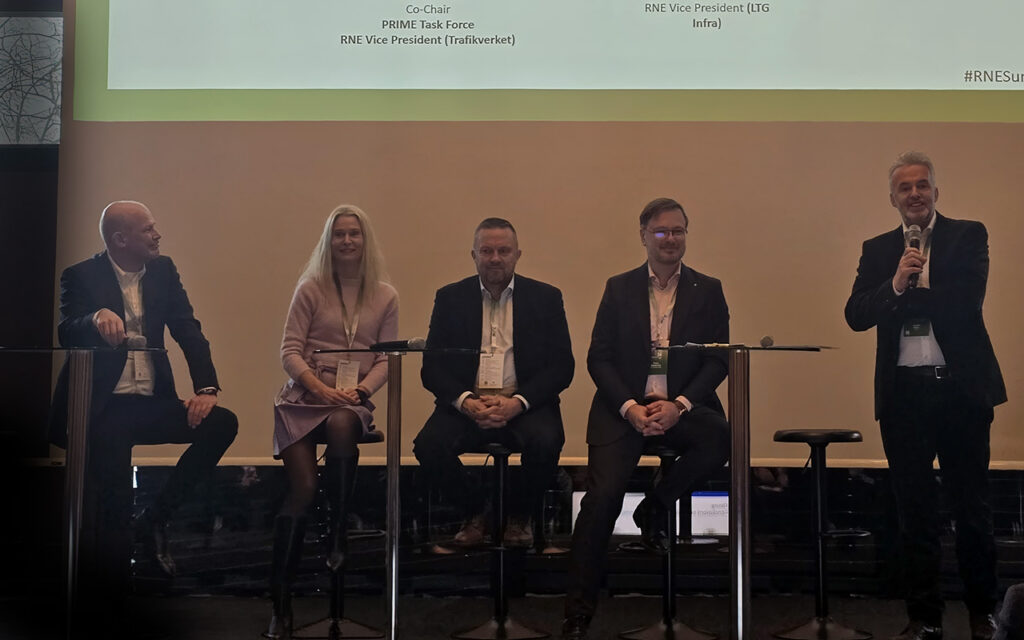
Chaired by Tomas Jonikaitis, RNE Vice President (LTG Infra), this panel explored the ongoing evolution of the Traffic Management Network concept, to support more efficient train operations across the European railway network.
Peter Šišolák (RNE) addressed the ongoing activities behind the drafting of the European Framework for Traffic Management. He highlighted the Infrastructure Managers common development of Traffic Management Rules and Procedures (RoP), designed to guide IMs under a unified set of principles. Martijn Meegdes (ProRail) presented the approach to establish these RoPs, which cover the full spectrum of operational scenarios and set a baseline for consistency across Europe’s network.
The panel also featured expert insights from Christian Schneider (DB InfraGO), who discussed disruption management and the crucial role that well‑structured contingency plans played during disruptions. Silva Kristan (SŽ-I) elaborated on the challenge of language barriers across Europe’s railway network and outlined the current initiatives to test alternative communication methods, including prototypes of translation tools. Speaking from a CEO’s perspective, Szilárd Kövesdi (GYSEV) emphasised the expected operational impacts and the ongoing efforts to harmonise traffic management procedures, particularly in cross‑border operations, where aligned and consistent practices are essential. The panelists underscored that only through close coordination among stakeholders, a truly efficient and integrated traffic management can be performed.
Panel 4: Roadmap to Make European Railway Digital
Moderated by Michel Geubelle (RNE/ Infrabel), the panel examined how the Capacity Regulation and Telematics TSI are driving the sector’s digital transformation.
Panellists Yann Seimandi (European Commission), Polymnia Vasilopoulou (ERA), Andras Till (RNE), Hanna Muenninghoff (RailData) and Ben Beirnaert (Combinant/ UIRR) shared perspectives from policy, infrastructure, operations and combined transport.
The Commission highlighted digitalisation as essential to a future European framework, by better alignment of TSIs and a move toward one‑stop shop tools for operational processes, supported by EU funding. ERA emphasised reference data quality, harmonisation and the development of a shared ERA Ontology to support consistent data exchange.
RNE underlined that the Capacity Regulation requires not only new common systems but transformational change within national organisations. RailData stressed its role as an enabler, noting that RUs need digitalisation projects with clear benefits. From the terminal and operator side, UIRR called for easy to use, low‑cost data exchange across the full supply chain.
Across the panel, the message was clear: the sector is aligned on the vision; now the challenge is implementation and cross‑organisational transformation. As one panellist summarised: “Let’s do it.”
Audience participation and RNE IT tool insights
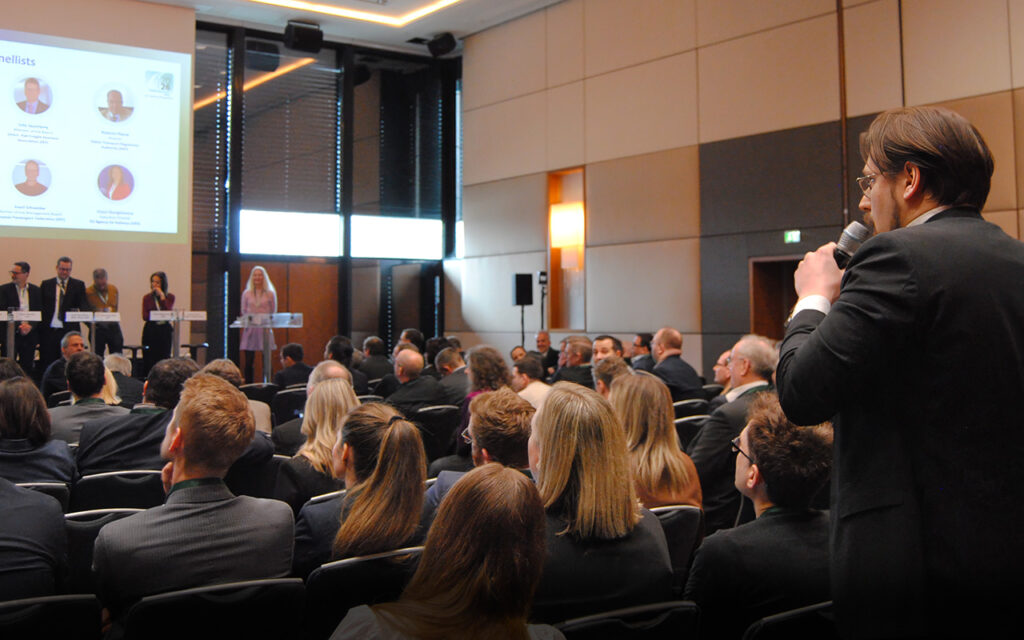
Not only panellists, but also participants had the opportunity to share their reflections through real-time polling, which enriched the on-site discussions (see polling questions and results in the Summit presentation).
During the breaks, participants on site could also learn more about ongoing digitalisation efforts reflected in RNE’s IT tools. Dedicated stands for the Train Information System (TIS), Digital Capacity Management (DCM), and the Rail Facilities Portal (RFP) offered insights and the opportunity to ask tailored questions.
Tackling Implementation
The second edition of the RNE Summit on Capacity Regulation proved to be a valuable opportunity to bring the sector together following the trilogue agreement in November 2025 and to pave the way for joint and effective implementation.
All recordings and presentations will shortly be made available on the dedicated Summit webpage.